
Samy Mansour
Partner •
Sydney

The New South Wales Government's new NSW Coal Industry 2026–50 policy has significant implications for coal mine explorers, owners and operators in the State.
In addition to imposing a formal ban on coal exploration and new coal mine approvals at greenfield sites in the State, with New South Wales becoming the first Australian jurisdiction to impose such a ban, the new policy also provides a clearer set of parameters within which to plan, conduct and invest in coal mining.
According to Parliamentary research, as at September 2025:
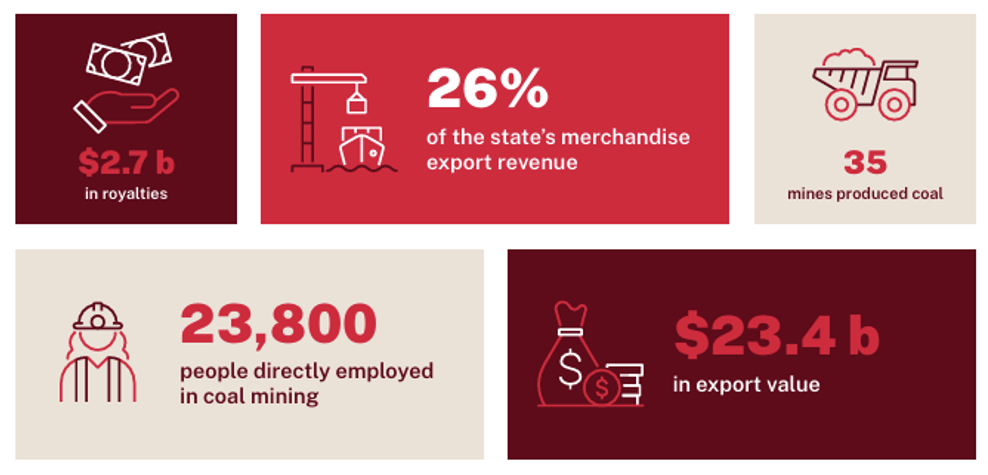
NSW had 35 operational mines;
planning approval was being sought for the extension of life of mine at 12 operating mines, and an additional mine obtained an approval but that is subject to legal challenge; and
nine mines were in care and maintenance, and six of these still had planning approval for mining.
NSW Resources provides the following key statistics for coal mining in NSW in 2025:
No new greenfield coal mines have been approved since 2018, and a series of landmark decisions by NSW planning authorities and the NSW Land and Environment Court (L+E Court) have left industry participants uncertain about how to go about securing approval for a new coal mine or expansion project.
Late last year, the NSW Government accepted all 13 recommendations of the NSW Parliament's Standing Committee on State Development’s Report No. 53 on Beneficial and Productive Post-Mining Land Use, which marked a policy shift, moving from piecemeal mine-closure arrangements to a coordinated, State-wide approach to economic transition and land repurposing.
Forward to 19 March 2026, and the NSW Government has now released the first comprehensive update to the State's coal policy in six years, providing a new framework for the future of coal in NSW through to 2050. And its headline announcement is significant: "NSW will no longer accept applications for new greenfield coal mines". At the same time, the Government has signalled ongoing support for extensions to existing operations and a structured approach to workforce transition.
To understand the significance of NSW Coal Industry 2026–50, it is important to appreciate the context in which it is delivered.
The approvals landscape for new coal mines and mine expansions in NSW has been in a state of uncertainty for the best part of a decade, shaped by a combination of decisions from the L+E and the NSW Independent Planning Commission (IPC), policy reviews, and shifting community expectations around climate change and how greenhouse gas emissions from mines should be regulated.
The most consequential development was the decision of the NSW Land and Environment Court in Gloucester Resources Limited v Minister for Planning [2019] NSWLEC 7, known as the "Rocky Hill" decision.
In that matter, the Court refused consent for a proposed open-cut coal mine near the town of Gloucester in the Hunter Valley, for two main reasons:
first, on planning, visual amenity and social impact grounds, determining that an open-cut mine in a scenic valley close to a rural community would cause unacceptable harm; and
secondly, and most significantly for industry, the Court concluded that greenhouse gas emissions of the mine, and including downstream or "Scope 3" emissions from the eventual burning of coal from the proposed mine, were a relevant consideration and provided an additional reason for refusal.
The Court's often-quoted conclusion was that the mine would be "in the wrong place at the wrong time" – the "wrong place" because of its unacceptable local impacts, and "wrong time" because its emissions would increase global greenhouse gas concentrations "at a time when what is now urgently needed … is a rapid and deep decrease in GHG emissions".
The Court rejected several arguments that had traditionally been relied upon by coal mine proponents, including that the mine's emissions were a small fraction of global totals, that coal would simply be sourced elsewhere if the mine were refused (the so-called "market substitution" argument), and that emissions would be offset by reductions in other sectors. As we commented at the time, the decision raised the bar considerably for any new greenhouse gas-intensive project seeking approval in NSW.
Although the Rocky Hill decision was a merits appeal (meaning it turned on the specific facts of the case and did not create a binding precedent for all future applications), its practical effect was profound. Gloucester Resources ultimately chose not to appeal. The decision had a chilling effect on new coal mine applications in NSW. No new greenfield coal mine project has been proposed in NSW since the Bylong (KEPCO) proposal was refused by the Independent Planning Commission in September 2019. The NSW Department of Planning itself indicated following Rocky Hill that it did not consider it necessary to change its assessment approach, but the reality was that proponents faced a dramatically more hostile approvals environment.
Subsequently in 2021, the IPC refused consent for the Hume Coal Project, finding that the project's incompatibility with the land use objectives for the area was, on its own, sufficient reason for refusal, compounded by the groundwater, social, and greenhouse gas impacts stating that, "based on the potential for long-term and irreversible impacts, and the impacts of the project on the social and environmental values of the region, the project is not in the public interest".
The previous strategic framework for the coal industry, the 2020 Strategic Statement on Coal Exploration and Mining in NSW, was released in May 2020 (following Rocky Hill) under the previous Liberal-National coalition Government. While seeking to provide investment certainty and acknowledging coal would remain important "for the next few decades," it did not directly address post-Rocky Hill approvals reality or the NSW Government's subsequent legislated emissions reduction targets under the Climate Change (Net Zero Future) Act 2023 (NSW).
NSW Coal Industry 2026–50 replaces the 2020 Strategic Statement and is the first coal policy issued by the Minns Labor Government. Its key features, as outlined in the document and accompanying announcements, include the following.
No new greenfield coal mines. Arguably the most significant change is the NSW Government's confirmation that NSW will not consider applications for new standalone greenfield coal mines. This formalises what has been the de facto position for several years but now makes it an explicit policy commitment. Notably, it does not distinguish between thermal coal used for energy generation and metallurgical coal used in the steelmaking process.
No further government investment in coal exploration. The NSW Government will no longer invest in coal exploration, although exploration will continue to be permitted near existing mine sites. Existing coal exploration licences will continue under the currently adopted style of use-it-or-lose-it renewal conditions.
Extensions to existing operations will continue to be assessed. The policy confirms that extensions to existing coal mining operations will continue to be considered, subject to project-by-project approval processes and robust regulatory requirements, stating these extensions will provide continued employment in the sector for decades to come. This is a critical distinction for operators with existing mines approaching the end of their current consents.
Strengthened emissions regulation. Alongside the policy, the NSW Environment Protection Authority (EPA) announced new regulatory requirements for coal mine emissions, focusing on fugitive methane. Large underground coal mines will be required to flare or use gas drained from mines with high methane concentrations, minimise methane leaks from old workings by resealing with concrete or gravel, and install ventilation air methane abatement technology where emissions exceed specified thresholds. These requirements will be phased in from 2027, following further consultation with industry, unions, and technical experts. In addition, Climate Change Mitigation and Adaptation Plans are being introduced to regulate emissions reductions at licensed facilities that emit 25,000 tonnes or more CO2-e Scope 1 and Scope 2 emissions, and the NSW Guide for Large Emitters now requires proponents of expansion projects to assess greenhouse gas emissions and prepare a GHG Mitigation Plan as part of the environmental impact assessment process.
Mine rehabilitation and closure planning. The policy maintains existing best-practice rehabilitation requirements, with regulations to ensure mining land is left in a safe and stable condition. The NSW Government has also introduced legislation to establish the Future Jobs and Investment Authority, which will require coal mine operators to provide at least three years' notice before closure and to share workforce transition plans with government.
Workforce transition. The Future Jobs and Investment Authority, backed by AU$27.3 million in establishment funding and access to a AU$110 million Future Jobs and Investment Fund, will work with industry and regional communities to support economic diversification and workforce reskilling in coal-producing regions.
For operators and investors, several practical takeaways stand out:
Certainty for existing operations and a clear pathway for extensions. The most commercially significant aspect of the policy is the continued support for extensions to existing mines. For operators planning an extension or whose current consents are approaching expiry, this provides meaningful comfort that extension applications will be assessed on their merits.
The greenfield door is closed (but was already shut…). While the formal ban on new greenfield coal mines is the policy's most prominent feature, it largely codifies an existing reality. No new greenfield project has been proposed since the Hume Coal refusal in 2021, and the combined effect of a tightening policy position and the State's legislated net zero targets had already made new greenfield approvals practically unachievable. For investors who had hoped that the approvals environment might eventually reopen, this represents a definitive answer.
Emissions compliance is a growing operational cost. The new EPA methane abatement requirements signal that the regulatory burden on existing operations will increase over time. Coal mining is the largest source of fossil methane in NSW, contributing approximately 11% of total State greenhouse gas emissions. Operators, particularly those running large underground mines, should expect to face material capital expenditure obligations to install abatement technology, and ongoing reporting and compliance costs. The phased introduction from 2027 provides some lead time, but planning and budgeting should begin now.
Closure planning and workforce obligations are being formalised. The three-year closure notification requirement and mandatory workforce transition plans under the Future Jobs and Investment Authority legislation represent a new layer of regulatory obligation for operators. These requirements mirror existing provisions for coal-fired power stations and signal the NSW Government's expectation that mine closure will be an orderly, planned process rather than a sudden event.
The broader economic context remains favourable (for now). Coal remains NSW's number one export, generating AU$23.4 billion in export revenue and AU$2.7 billion in royalties in 2025, with Japan (43%), China (27%), and Taiwan (10%) as the State's largest buyers. While export volumes have declined modestly since 2018/19, the most significant falls in demand are not expected until the 2040s. This provides a window of continued strong demand within which existing operators can plan their long-term strategies.
For NSW coal operators and investors, the picture is one of a more settled regulatory and policy setting meeting a favourable near-term market, with current global events delivering a rally in Australian seabound thermal coal prices (but currently well below the highs of 2023).
The long-term trajectory towards decarbonisation has not changed, but thermal coal remains a critical energy security commodity. While NSW Coal Industry 2026–50 marks a significant moment in the evolution of coal mining regulation in New South Wales, it does not spell the end of coal mining in the State.
The task now is to engage with the detail of the new policy, understand the risks, opportunities and compliance obligations it brings, and plan accordingly.
For coal mining companies, consideration should be given to revisiting:
proposals for new greenfield mines or related exploration, since the NSW Government has now stated explicitly that these will not be approved;
opportunities to extend existing coal mines, including (for example) in scope, duration and footprint, given the Government's clear statement that it will consider applications for extensions;
proposals for extensions, to ensure that they contain sufficient controls to reduce emissions and otherwise align with the policy;
any coal exploration opportunities adjacent to existing mine sites, given our comments above; and
plans for care and maintenance, and also for closure, given the requirements for closure notification and mandatory workforce transition plans, and the Government's stated intention to assist with workforce transition.
For potential coal investors, the new policy means that there is a now a focus only on acquisitions in existing projects, with a particular focus on life of mine extensions and adjacent growth.
Legal updates and articles on the topics that matter to you, sent as they happen.
Subscribe