
Chris McLeod
Partner •
Melbourne

Registered intellectual property rights are powerful and often offer the best protection for product designs. However, if those rights expire, businesses face an uphill battle to stop third parties from copying their successful designs.
The Federal Court has delivered a sobering judgment for businesses seeking to stop others from copying their product designs after the expiry of registered intellectual property rights.
Bodum AG is the manufacturer of a range of well-known products. This includes the Chambord coffee plunger. Some years ago, Bodum successfully brought an action to stop another party from selling a product with the same shape but under a different brand.
Bodum also manufactures a range of double walled glasses. As it had successfully done in the coffee plunger case, Bodum recently sought to stop H.A.G Import Corporation (Australia) Pty Ltd (HAG) from selling a product with an almost identical shape but under a different brand. HAG is the Australian importer and distributor of homewares under the well-known Maxwell & Williams brand.
However, in Bodum AG v H.A.G Import Corpn (Australia) Pty Ltd [2026] FCA 238, the Federal Court rejected Bodum's application.
Bodum alleged that HAG had engaged in passing off and misleading and deceptive conduct under the Australian Consumer Law (ACL) by importing, promoting and distributing products almost identical to Bodum's best-selling Pavina and Canteen double walled glasses. The decision is a stark reminder that, as the Court put it, intellectual property law "allows for the registration of trade marks, designs, patents and gives protection from copying but for generally finite periods", and that once that finite period is over, brand owners may find themselves exposed to competitors copying their products.
Importantly, Bodum was unable to allege design infringement because its relevant design registrations had expired in 2014. This case was therefore essentially an attempt by Bodum to extend its monopoly over the shape of its popular double walled glasses without recourse to any registered intellectual property rights.
HAG admitted that it had intended to adopt the shape and design features of Bodum's Pavina and Canteen products, and there was no dispute that the shape and design of HAG's products were almost identical to Bodum's products, as shown below.
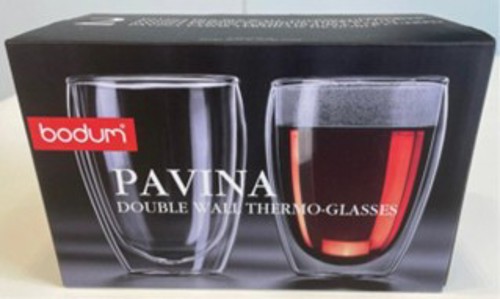
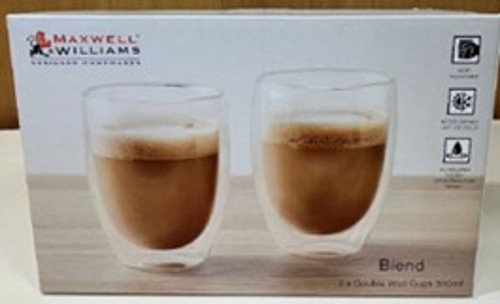
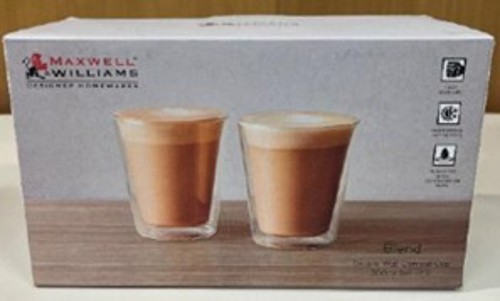
However, HAG's products differed from Bodum's products with respect to their branding. HAG's products did not display the Bodum trade mark, a removable sticker with Bodum's logo. They also did not have a silicone seal (which appeared on some earlier versions of the Bodum product but not later ones). By contrast, and importantly, the HAG products bore the trade mark "M&W" imprinted on the bottom of each glass. Both Bodum and HAG adopted packaging that prominently featured images of the glasses as well as their respective trade marks: Bodum and Maxwell & Williams.
Bodum was unable to establish a sufficient reputation in the shape of its Pavina and Canteen glasses. It could not show that its advertising and promotion of those products was sufficient to make them "iconic" or "distinctive" in the minds of consumers, that is, that a relevant consumer would recognise them as Bodum glasses simply by their shape. Most of the advertising Bodum relied on was general advertising for the Bodum brand and its broader range of products, with the Pavina and Canteen glasses typically advertised alongside other Bodum offerings. Bodum had not "saturated the market" with advertising focused on the particular shape and features of the Pavina and Canteen products.
The Court distinguished Bodum's advertising of the Pavina and Canteen products from that of Bodum's coffee plunger in the earlier case mentioned above: Peter Bodum A/S & Ors v DKSH Australia Pty Ltd [2011] FCAFC 98. In that case, the Full Federal Court found that Bodum had established a "very significant secondary reputation" in the features of its Chambord coffee plunger, and that the Respondent's rival Euroline plunger, which closely resembled the Chambord, was not sufficiently distinguished by its packaging or the relatively unknown "Euroline" brand name, resulting in a finding of misleading or deceptive conduct. By contrast, in the present case the evidence of advertisements revealing the distinctiveness of the shape and design of the Pavina and Canteen glasses was not of the same nature or quality; the coffee plunger had been the "apex of the Christmas tree" in Bodum's advertising, whereas the Pavina and Canteen glasses were generally promoted as part of a broader product range.
Bodum lost despite the fact that the Pavina and Canteen glasses won several design awards and were the only double walled glasses on the Australian market for 10 years (while the design registrations were in force). However, 2019 was the key date by which Bodum's reputation was assessed, being when HAG's first product entered the market. The Court found that, by that time, the position had changed. That is because there were then a range of other double walled glasses on the Australian market, and there had been reasonably significant sales of those products such that consumers would have been aware of alternatives. Many of those competing products had similar features to the Bodum glasses, albeit with somewhat different shapes. The Judge concluded that consumers seeking to distinguish between different brands of double walled glasses would identify Bodum's products by reference to the Bodum brand name rather than the design features of the products themselves.
Bodum's failure to establish a reputation in the shape of its glasses was fatal to its claim for passing off. With respect to the ACL claims, the failure to establish reputation was also damaging, because Bodum could not point to the shape alone being so closely associated with Bodum that its use by HAG would likely constitute misleading or deceptive conduct. This meant Bodum faced the challenge of proving that HAG's conduct as a whole was likely to mislead or deceive consumers, a challenge it was unable to meet, as explained below.
The Court found that HAG's conduct did not constitute misleading or deceptive conduct, for several reasons.
First, HAG used the "M&W" mark on the bottom of its glasses. The Court rejected Bodum's argument that this did not amount to "proper labelling" because it appeared only on the bottom of the glass rather than on the side or elsewhere. On the contrary, the Court found that etching on the bottom of glassware is "entirely ordinary and would be expected by a consumer".
Second, the strength of the Maxwell & Williams brand was a material factor, and a key difference from the DKSH case, where there was no comparable evidence of widespread use of the Respondent's "Euroline" brand name. The packaging and advertising of HAG's products prominently referenced the Maxwell & Williams brand.
Third, the existence of other double walled glassware on the Australian market meant consumers would be more likely to look for brand labels on products when seeking a particular brand.
Finally, while not a determining factor in itself, there was no evidence that HAG intended to mislead or deceive consumers regarding the origin of its products.
Interestingly, HAG admitted that it intended to adopt the same shape and design features of Bodum's Pavina and Canteen products. However, the Court drew a clear distinction between copying a product design to compete and copying in a manner likely to mislead consumers as to the origin of the product. HAG did the former but, through its own well-known branding and labelling, avoided crossing the line into the latter.
While it is possible that Bodum will appeal this first instance decision, the case serves as a timely reminder of some key principles:
Registered designs are a powerful tool. Bodum enjoyed 10 years as essentially the exclusive supplier of glasses with this design to the Australian market while its design registrations were in force. Where a new design is created, careful consideration should be given to protecting that right by seeking a design registration, as this will generally make it easier to prevent third parties from copying a design while a registered right remains in force.
In addition to registered designs, "shape" trade mark registrations should also be considered. Unlike registered designs which have a 10 year maximum, trade marks can be registered in perpetuity.
Branding and labelling is crucial. HAG admitted that it copied the shape and design of Bodum's products. However, by prominently labelling its glasses with its distinctive branding, HAG was able to show that its promotion and sale of the products was unlikely to mislead or deceive consumers into believing they were Bodum products.
Developing a reputation in any house brand is a good defence. HAG was able to show that its Maxwell & Williams brand was so well known that consumers would recognise it and understand that HAG's products were not Bodum's. Developing a house brand under which products can be sold, even if those products are copies of other well-known products, is a useful strategy that can minimise the risk of a finding of misleading or deceptive conduct.
Legal updates and articles on the topics that matter to you, sent as they happen.
Subscribe